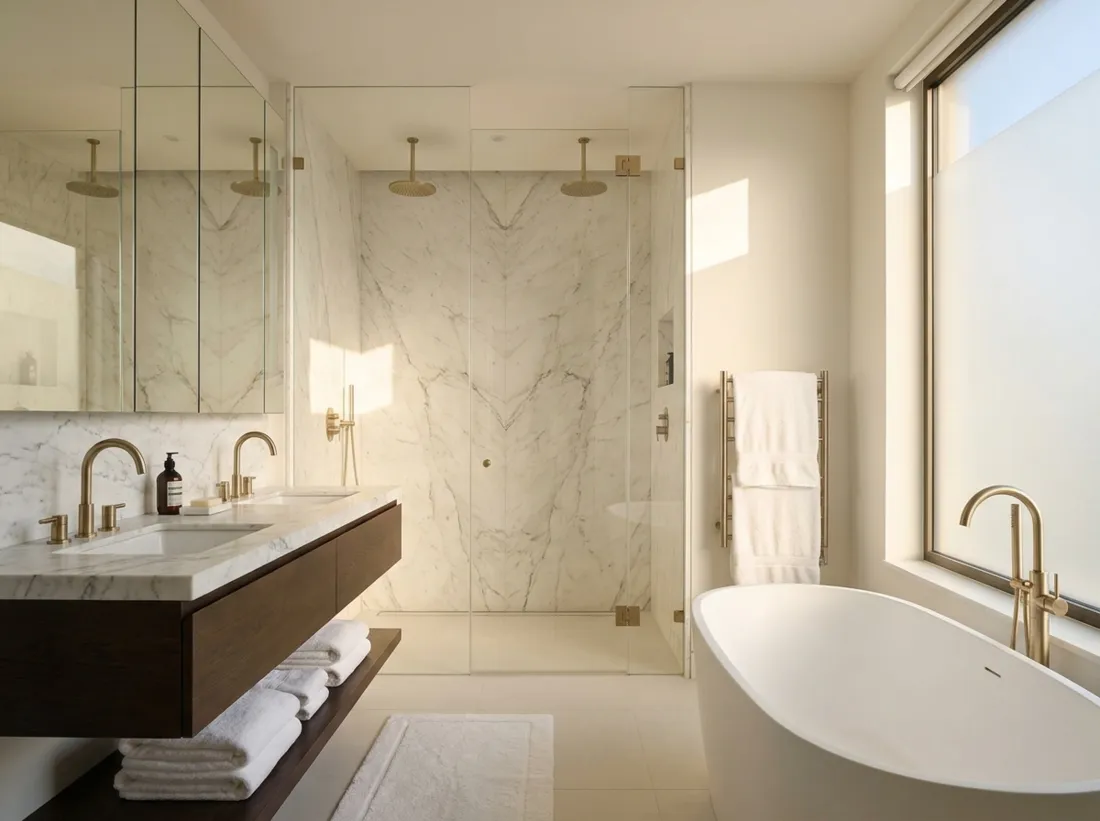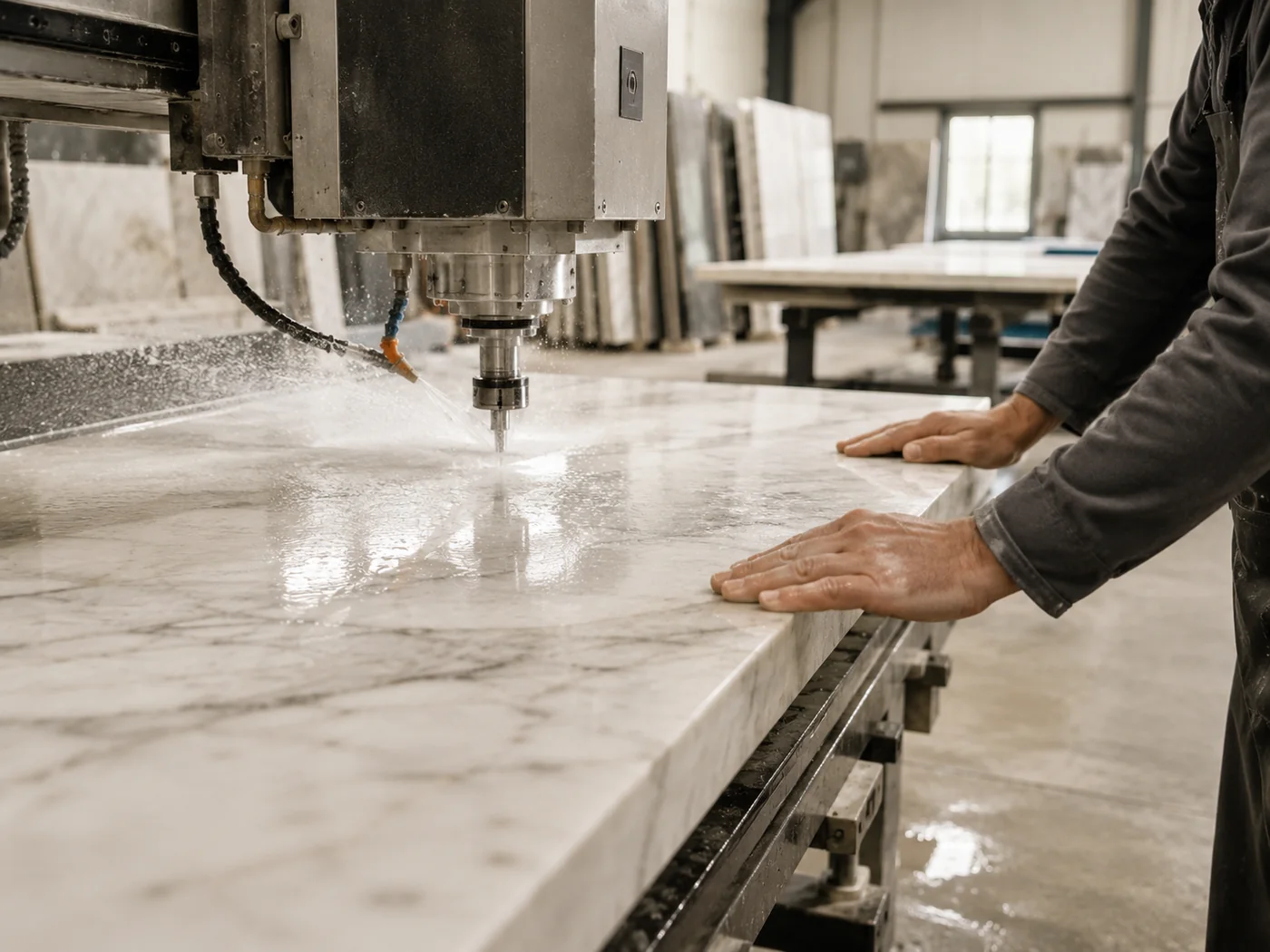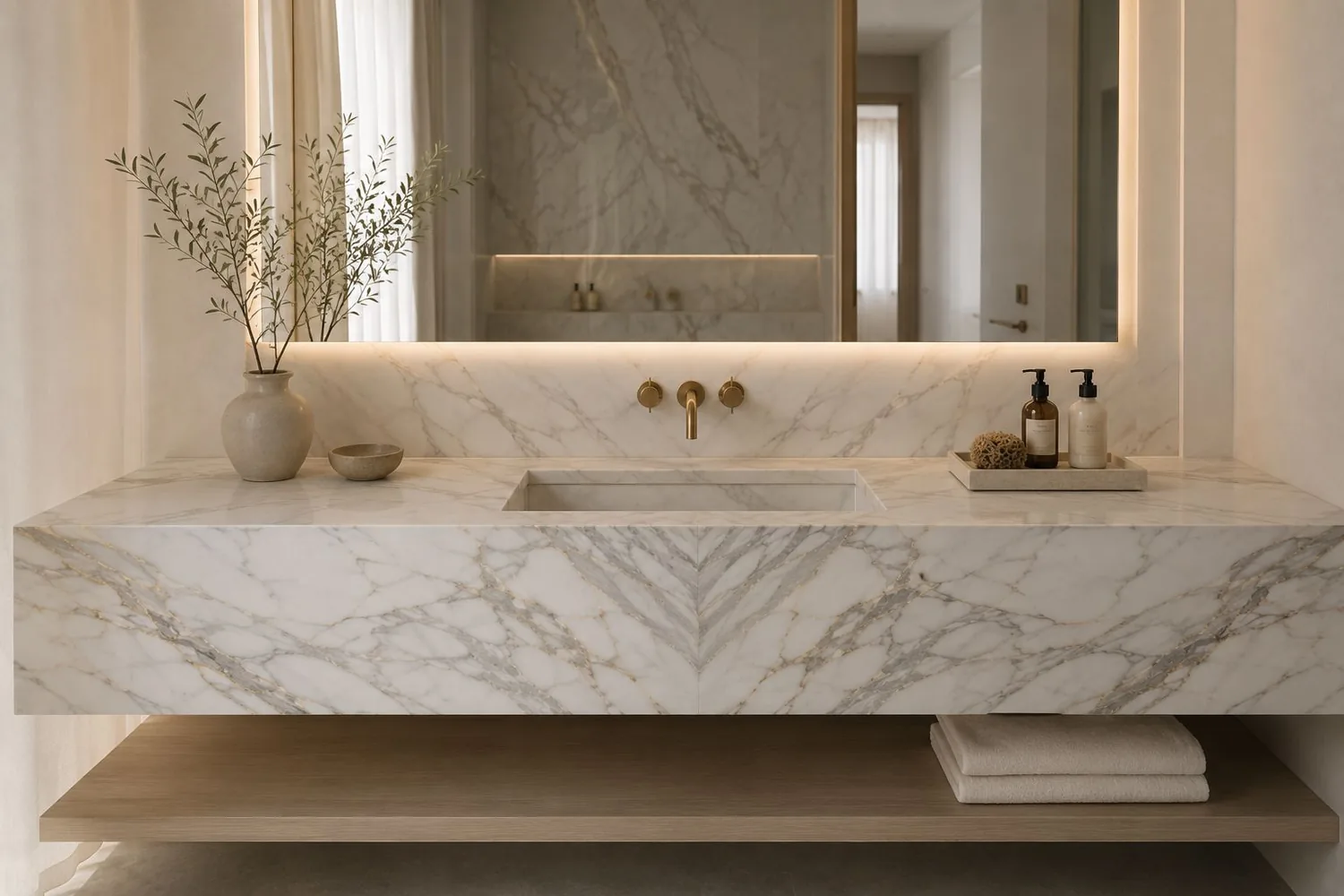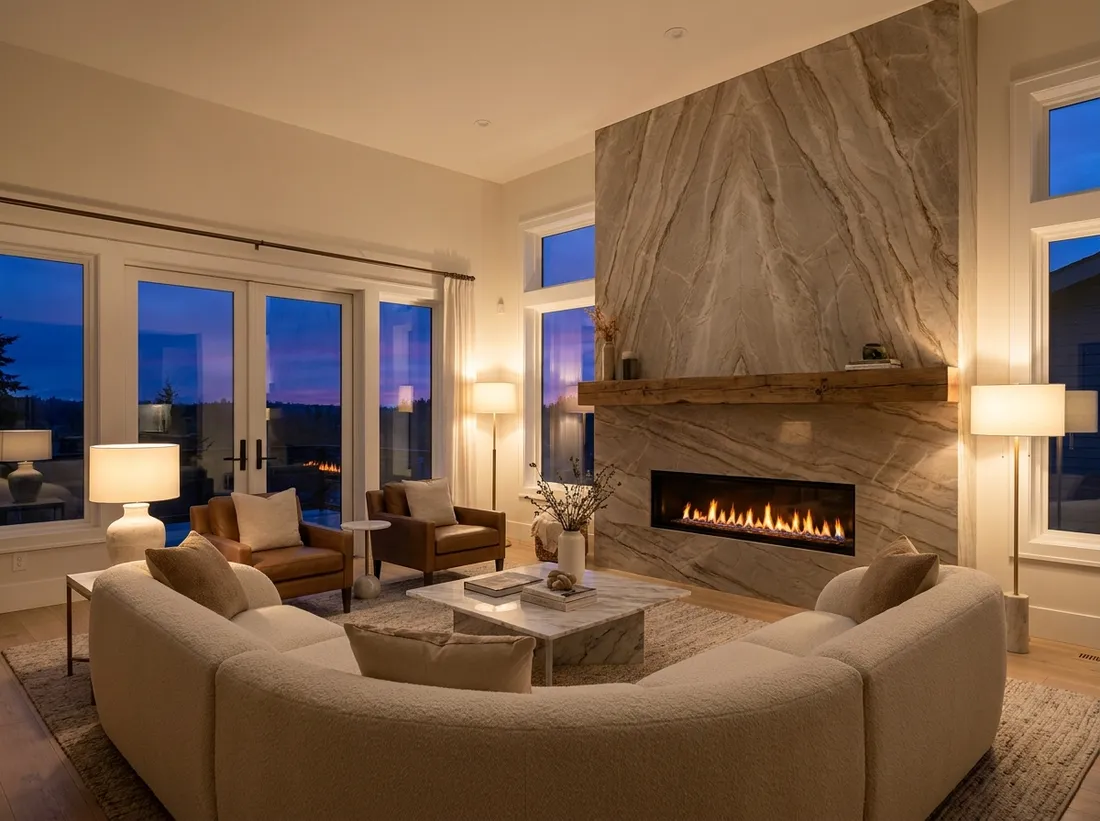
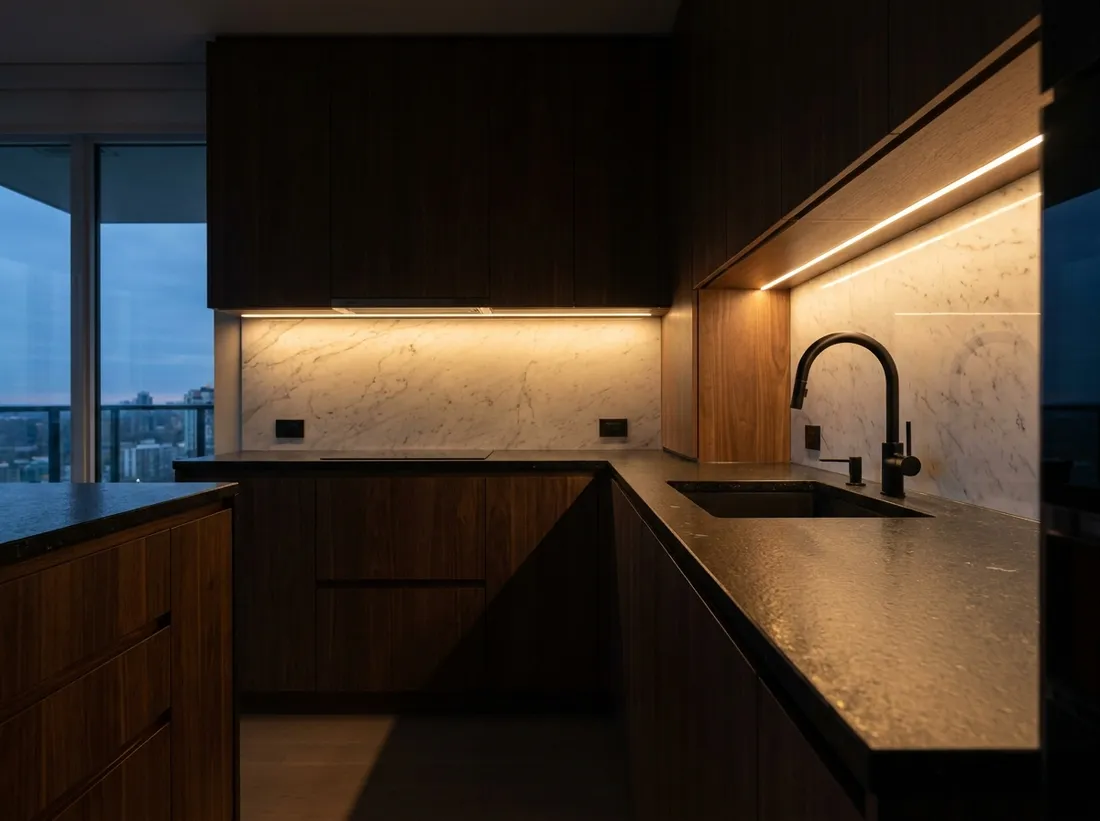
It's the question we hear more than any other in the shop: should we go with granite or quartz? Both make excellent kitchen countertops. The right answer depends less on which stone is "better" and more on how you cook, clean and want the room to feel.
The short answer
Choose granite if you want a one-of-a-kind natural slab, handle hot pans often, and don't mind sealing your counters now and then. Choose quartz if you want a consistent pattern, a non-porous surface that never needs sealing, and the lowest-maintenance option for a busy household.
What each one actually is
Granite is quarried natural rock, cut into slabs and polished. Every slab is unique — the flecks, movement and color variation are formed by nature, so no two kitchens look the same.
Quartz is an engineered surface made mostly of ground natural quartz bound with resins and pigments. Because it's manufactured, the color and pattern are consistent from slab to slab, and it comes in hundreds of designs — including convincing marble looks.
Side by side
| Granite | Quartz | |
|---|---|---|
| Look | Natural, every slab unique | Consistent, huge range of patterns |
| Sealing | Periodic sealing recommended | Never needs sealing |
| Stain resistance | Very good when sealed | Excellent — non-porous |
| Heat | Highly heat-resistant | Resins can scorch — always use trivets |
| Sunlight | Unaffected by UV | Some colors can fade in strong direct sun |
| Best for | Cooks, statement natural stone | Busy families, low upkeep, uniform looks |
Durability and everyday living
Both materials are hard, scratch-resistant and built to last for decades in a working kitchen. Where they differ is in the details. Granite shrugs off heat, which is why many serious home cooks love it next to the range. Quartz is the more forgiving surface when it comes to spills — red wine, coffee and oil simply wipe away because there are no pores to absorb them.
The trade-off: quartz's resin binder doesn't like direct, sustained heat. A hot pan set straight down can leave a mark, so a trivet becomes a habit. Granite, on the other hand, asks for a quick re-seal every so often to keep its stain resistance at its best — a simple job that takes minutes.
Looks: one-of-a-kind vs. consistent
If you love the idea that your countertop exists nowhere else, granite delivers that every time. That's also why we always invite clients to see full slabs in person — the photo of a sample chip never tells the whole story. With quartz, what you see in the sample is what you get, which makes it easy to plan a large kitchen with several seams or to match a vanity down the hall.
What about cost?
There's no blanket rule. Entry-level granite and entry-level quartz often land in a similar range, and premium options of either can climb quickly. The final number depends far more on the specific slab, the square footage, edge profiles, sink and cooktop cut-outs, and backsplash than on the category alone. If budget is tight, ask about remnants for smaller jobs like vanities.
Our honest recommendation
- You cook a lot and love natural materials: granite (or quartzite, if you want a marble look with natural toughness).
- You have young kids, a rental, or simply want zero fuss: quartz.
- You want a marble look without marble's upkeep: a marble-pattern quartz or a quartzite.
- Sunny kitchen with big south-facing windows: lean toward granite or ask us about UV-stable options.
Still torn? That's exactly the conversation we have in the shop. Come walk the slabs, bring a cabinet door or a paint chip, and we'll help you see both side by side under real light.
Frequently asked questions
Is quartz more expensive than granite?
Not necessarily. Entry-level options of both are often similar in price; the final cost depends mostly on the specific slab, square footage, edges, cut-outs and backsplash.
Does granite need to be sealed?
Yes, periodic sealing is recommended to keep granite stain-resistant. It is a quick job most homeowners can do themselves.
Can you put hot pans on quartz?
It is best not to. The resins in quartz can scorch or discolor with direct, sustained heat, so always use a trivet.