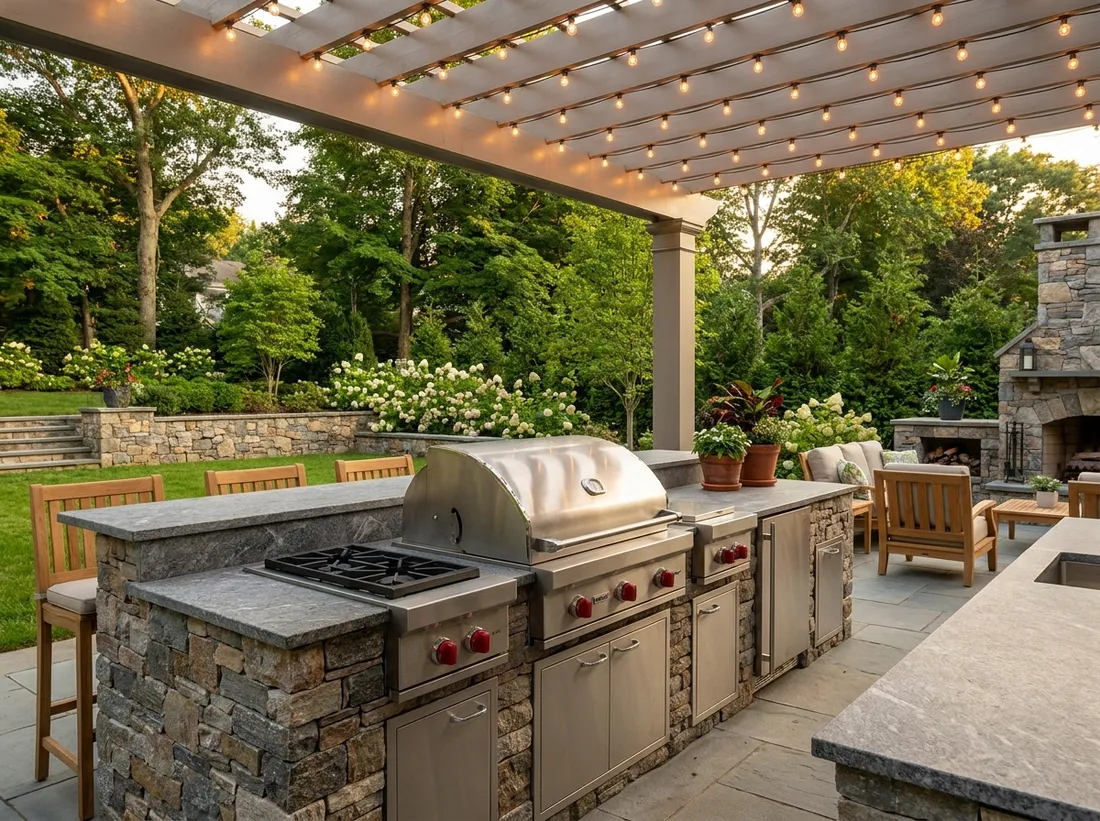
An outdoor kitchen is one of the best ways to enjoy a New England summer — but the countertop has to survive the rest of the year too. Freezing and thawing, strong sun, rain and even salt air all put stone to the test.
Granite: the go-to choice
Dense granite is the most popular outdoor countertop for good reason. It handles heat from the grill, isn't affected by UV light, and holds up well through freeze-thaw cycles when it's properly sealed. Many people choose a honed or leathered finish outdoors: it's less slippery when wet, shows fewer water spots and pollen, and stays cooler in the sun than darker polished stone.
Other good options
- Quartzite: hard and UV-stable; choose a dense slab and keep it sealed.
- Soapstone: non-porous and unaffected by heat; it scratches more easily but those marks can be buffed out.
- Outdoor-rated porcelain: some large-format porcelains are made for exterior use and are very low-maintenance.
What to keep indoors
- Quartz: the resins in engineered quartz can yellow or fade in direct sunlight, and most manufacturers don't recommend it outdoors.
- Marble: it etches from rain and acidic spills and weathers quickly outside.
- Very porous stones: water that soaks in and freezes can lead to cracking over time.
Design tips
- Choose a lighter color if the counter gets full afternoon sun — dark stone can get hot to the touch.
- Allow a slight overhang with a drip edge so water runs off rather than down the base.
- Plan cut-outs for the grill, side burners and sink before templating, with the appliance specs in hand.
- Make sure the base is solid and level — stone is heavy.
Winter care
- Clean the counter thoroughly at the end of the season.
- Do the water test and reseal if water darkens the stone. See our stone care guide.
- Use a breathable cover — avoid trapping moisture under plastic.
- Never use de-icing salt on or near the stone.
Frequently asked questions
What is the best countertop for an outdoor kitchen in New England?
Dense, sealed granite is the most popular choice. It resists heat, UV light and freeze-thaw cycles.
Can quartz be used outdoors?
It is generally not recommended. The resins in quartz can fade or yellow in direct sunlight, and most manufacturers do not recommend outdoor use.
How do I protect an outdoor stone countertop in winter?
Clean and reseal it at the end of the season, use a breathable cover and keep de-icing salt away from the stone.